:
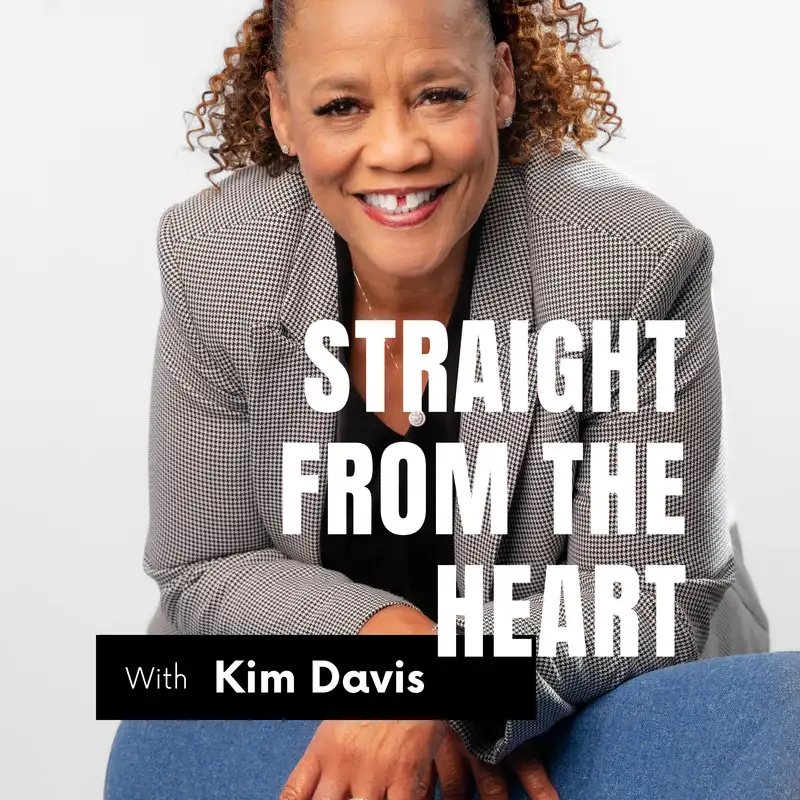
Hello and welcome back to another episode of Straight From the Heart. I am so excited today. I can't tell you, I mean, you know, this is a new season, uh new challenges and new guests. And more than anything, I want this season to be about uh current events, but also let's tell the truth and let's go straight from the heart and let's talk about things that need to be talked about in our community. I have the honor of having someone who is not just an Entrepreneur but she's part of the Heartland team. She has her own marketing firm. She is what I call my marketing group guru uh In the house today. We have Brittany who good in and she is also the founder and co-owner or owner CEO sole owner now CEO. Okay, so honor and CEO of Rapture Marketing Agency. And if you've seen our stuff, you've seen Brittany. Brittany, welcome and thank you for joining me today for the conversation that's going to be very, very important to this year. This being an election year, you and I've had some conversation. You've heard me talk about politics. And one of the things that we talked about was voter registration, but voting after you register. And then the importance of not just the national level elections, but this state and local level. So today, Brittany, want to just, we're just going to get comfortable. We're going to have a conversation. We don't have any scripts, so we can go here, there, and everywhere. They find out in my show that we go off script, so it doesn't matter. So again, welcome and thank you. Thank you for coming. Thank you for having me. Miss Kim, it's my honor to be a part of the team with the Heartland Black Chamber. I'm blessed every day. I'm so grateful. And I'm just so honored to be a guest today and straight from the heart. Politics is definitely my week suit, but I've learned a lot through me. I've learned a lot through you. So go ahead and ask me. I'm probably going to speak for the younger generation with my answers, but I will do my best. oh So let me start with this. What do you know about voting? What do I know about voting? The best I know is pretty minimal. I would say, you know, when you go to the DMV, you register. They ask if you want to be registered to vote. I always say yes. Okay. That is the far extent as I know. I know they send it in the mail sometimes they'll have you fill out the ballot. But sometimes when I see that, I feel like confused. Right. I'm not too sure what I'm supposed to do. So I usually trash it because I don't really know what to do. Yeah. So I would love insight if you think there's a better way to handle the voting process. So when was the first time you registered to vote? How old were you? Whenever I was able to, think that's 18, right? I've always been registered to vote. Oh good. I never really... I don't want to make an uneducated decision. Which is why I know it's not as good to make no decision either, because you're giving your power away. But yeah, that's about as much as I know. Okay, so when you start thinking about voting, what elections are you most interested in right now? You're speaking to the ignorant here. don't know. What are you most interested in when you talk about voting? Which one grabs your attention? What do mean by which one? So, I mean, when it was time to vote, what elections do you vote for? The presidential, you mean, in that regard? Yeah. That's the one I think I would pay the most attention to. Okay. But recently you mentioned how there's a difference with the state ones, which makes more of an impact on your direct day to day life. I know nothing about that. I would like to know how I can responsibly be a part of my community in that way. So please enlighten me. Okay, so let's just talk about that. So understanding that um there are different levels. And so when we talk about the presidential election, presidents, um they represent not just the nation, they represent us globally. So... ah When you start talking about voting for the president, you want to want to know ah more so what is his uh not just his domestic agenda, but what is his foreign agenda? And the reason being is because the foreign policies affect our everyday living. ah So when you start talking tariffs and all that, but before you get there, you live, work and play in states, cities or towns, districts and communities. And there are seats. ah Do you know what an alderman is or a councilman, commissioner is or what a legislator is or what the county executive does or what the mayor does? I mean, these are questions. These are valid questions. Who is your state representative? We know Congressman Cleaver is our federal representative, but who is your state representative? Who is your state senator? So all of those things matter specifically to your day to day or to how things are handled in the community where you work, live and play. So let's think about this. I'm gonna ask you a question. I'm gonna ask you a serious one. And please. Do not be embarrassed because this is what this is about. Because I know in your immediate circle of friends, how many of them are politically educated? Probably one out of five. Right. So what we really want to do is use this platform as a time for your age group and your constituents to say, oh, okay, now it makes sense. So let's think about, we have an election coming up in Kansas City. We just have one in Wyandotte. In Wyandotte, Crystal Watson, who used to be the president of the Heartland Black Chamber of Commerce, ah is now the mayor of KCK and CEO of Unified Government Wyandotte County. So they're unified. On the Missouri side, we have a mayor and a county executor. ah You remember all the hoopla that just went around. ah actually recalled the seat of the county executor uh and they temporarily put someone in. However, right now coming up, there's going to be a mayoral race coming up in Kansas City. So uh the mayor that we have now will be terming out. And then there's midterm for, or term for several of the council people who have been sitting in their seats for a couple of years. The question would be, why would I vote for them? What do they do and what does it mean to me? So let's say a council person. We have six districts in Ken City proper. And uh in those districts, you have the first, second, third, fourth, fifth, and sixth. And each district has two representative, one that's in district and one that is at large. now does any of this make any sense yet? You lose me a little. You're going too into specifics. I think when you kept it pretty high level, I was understanding. oh This recent part, you started to lose me a little bit, just to be honest. Okay, no, and it's good because this is why it's important though for you to get the specifics because then you understand why I would vote for a council person. Why should I know what that council person's agenda is? So you look at, um we'll take uh the third and fifth district because those are the most disenfranchised or the most uh economically oh disparate communities. So in those communities, oh unemployment is high, uh crime is high, there's a food desert issue, uh the streets are not as well kept, uh there are a lot of blight and empty houses. So your in-district council people are the people that are trying to write bills and legislation to try and get some of these things fixed. At large, council people are trying to garner support across the board to help to get that kind of support. The reason it's important to the people that live in those districts to go and vote for the person that will fight for them is because they need the one that's going to know their issues and really, really put their nose to the grindstone and push for it. That's why it's important to know who the person is that's representing you in the district. Now, if I want to go back high level, why do we have a governor? What does the governor stand for? What does he do? Why is he important? Well, federally, We have all these federal agencies. So you have the Department of Education and the Department of Health Care and Department of uh Employment or Unemployment or Employment, Health and Human Services, the Department of Labor. You have all these different departments. And in each state, there are the same departments that have to make sure that those issues are handled within that state. And from the state level, You have cities and towns that have the same departments that need funding, that need support. And so from a federal level, ah depending on the people that are sitting in those seats, they will disperse funding to the state, which goes to the governor's office. The governor's office will make certain decisions on where to disperse in the cities and how much they should get. And then from that goes down to each individual state. Your state representatives ah and your state senators, they lobby and fight so that their districts are not left out or that their districts can get what they need. So I know it's a lot, ah but it's important for your generation to learn why it is. What does that mean down the line? So we think about in the States, let's look at something that just happened, Roe versus Wade, the abortion, the abolishment of abortion rights. You're a woman. Now you could be a woman that don't agree with the abortion rights. You're a pro-lifer and I would never have an abortion. But do you think that another human being has the right to decide for you? whether you're a pro-lifer or pro-right. And that's where the issues fall. So now it used to be that it could be put on a ballot and the people could vote for it. And then it becomes a law. Whereas now in our situation, we have leaders that will override the vote of the people. And so now it's even more important that we stand for our voter rights. For my perspective, I want to share kind of how I perceive this based on someone who uses social media actively as a marketer. I'm constantly on these platforms and I noticed there's a lot of noise and distraction from important things like this. And I'm seeing that pattern because what I'm noticing is the control of the people. getting less and less in their hands. People are losing their control and their say because of these other distracting things that pop up. I can't even name one right now, because it just sounds so silly. There's so many current events that happen, know, it could be a random fire or it could be this shooting and those things are as terrible, I agree. But they use these things to distract us from what they're doing, I think politically, in the government. Like the redistricting, I've learned solely through you actually, because they could be doing that while we're focused on the shooting and the fire and they're drawing the line so we have less say. So I'm really enlightened by how you're sharing how we can think about these things. And for me, I find it more relatable when you put the human behind it. When you tell me that it can help this person um get more funding for a home, that to me makes me more motivated to wanna stand up for those people because you see a homeless person on the street might not think about it. But when you start to the image of what are they really going through, that empathy will shine. yes, absolutely. And that's where you have to put your mindset when it's time for an election. It's bigger than yourself. But when you look at it as that could be me, you tend to think of it differently. Absolutely. So let me ask you. If there was something that you have thought about and wanted to, you know, like something burning, like, tell me about this. What is it? When it comes to voting? This might seem silly, but I think outside the box. Why is there only two parties? Well, actually, there are three parties. The third one isn't spoken about enough. That's what I want to know about. Well, a lot of people don't ascribe to the independent party. And actually, there's two or three parties, actually, or there's more than that. You know, people pop up with parties. However, in democracy and when our forefathers created the Constitution and the Bill of Rights and all the good things. ah The two parties were created. There was a more conservative party and a more liberal party. Now, I'm going to tell you a story that's really, really funny. There was a time that the Republican Party was the Liberal Party. I was just about to follow up with this question because I heard that the rules have kind of started to switch. Not kind of started completely totally switch completely. So there was a time that the the more uh underserved community were Republicans and the more affluent and money grabbing. The over people party was the Democratic Party. Now, in my lifetime, I can't tell you when it happened, how it turned or why. I do know that um somewhere in the 70s, I'll say the early 70s, late 60s, early 70s, uh under certain administrations, even the Nixon administration, which was a Republican administration, was a lot more focused on the people. ah there were a lot of social programs that came out of the Nixon administration. ah One of the um biggest components that nobody ever talks about, but it's a real big key issue ah in today's technology, is the microchips. So in the, um I want to say in the 60s under the Nixon's administration, 60s, 70s, Nixon, uh I guess, signed into law a bill that said uh no microchip manufacturing company uh can exist or build in America without uh the participation of the disenfranchised community. And that was the black community at the time. It was specific to black community. And then I want to say it was under either the Bush or Clinton administration that included black and brown. So it became more minority for the black and Hispanic community. And then under Trump first term, I believe Trump introduced it to the rule, to bring in the rule, which is now there's nothing bad about it in that because it was talking about inclusion. It was. No one wants to leave out any oh one group of people. But because, I don't know, it's just like healthcare. We'll go back to that in a minute. Because there's so much money involved in this. It's no longer really about the people and how it can be, number one, life-changing for all three of these communities. There is enough need for the microchips and uh for um those types of components because of our technology and because of the things that we make. The iPhones or the Androids, mean, all those types of things use these things. um No one would be without. You would have to build the manufacturing plant. away from the towns and cities because of the nuclear and the uh dangerous radiation. But there was still a, there's a place where you could take it. There's a way to include everyone. And because of political and the financial implications, we've got big trades with China. China does most of the chips. all that's going on back and forth between the president and China. Seriously. Could you expand on the chips? Cause at first I was thinking, and I think I could be wrong because I was talking about the chips that are inserted like into the body or like on a debit card. Any kind of chip. A semiconductor is a chip that is created that is put into different components. make them for, chips are made for any, that can be read on anything. There are chips being created that are going to be used for medical purposes. part scares me. Well, uh let me ask you this question. If there was a chip that could, you had said that they diagnosed you with a stage four cancer and they could insert a chip that could go in, locate the cancer and dissolve it. That's pretty hypnotizing. is, but this is where we're going in micro ah and in bio medicines. There are so many different things that we're afraid of because one, we're wanting our privacy. We're wanting our own space and we don't want people invading us. And so uh as a person, It's just like you have an iPhone. You just bought glasses. Yeah, you're right. I'm already a part of it. And so technology has to come from somewhere. Everything that you touch has to come from somewhere. And it can always be pulled down from somewhere else because it's out here in the atmosphere. I am completely aligned with you in terms of how important technology is and the magical things it can do. I'm open-minded to these things and I love that you are too. think that's a great trait to have. where the line gets a little fuzzy to me is when it comes to the human body and infiltrating the body. Is it just going to live in my... I have no idea. I'm not a scientist. Listen to this because I figured this out when I went shopping at Whole Foods and I use my chip on my phone to pay with my Apple Pay. And they have this new thing set up so that you can scan. And I said, is that for my phone? They said, no, it's for the people who have the chips in their hand. And I was shocked. They had that. I mean, what's the difference in going to the airport now and going through clear? What is the clear thing? it with your eyes? Retina, yeah. Doesn't it just scan your eyes? Yeah, but do you know how when they're scanning your eyes what they can put what they can pull and put in I don't and I do clear So you can tell from firsthand experience what they're putting into you. No, I don't know I just know I'm been kind of weird lately. No, I know honestly uh there's so many things that we don't know right and because We live in a world that there's so much there's conspiracy theories and We are not educated about all the stuff that's happening and going on and it goes back to the policies in the politics and how do we uh create uh a democracy and a leadership in politics where there is transparency, where the people do understand what's going on or is it too big? I mean, is it too much for the average uh person to get all the information. We have become a society that believes that we're supposed to know everything at the time that it's happening because of what? Social media. And everything is in the minute. You you get in the minute news live, live, live. What's happening right now is live. And so um because of that, we want to know everything, but we don't want to know anything. Wow. You couldn't have said that better. How do you discern what is proper information and not especially on platforms like social media? What is proper information? that's incredible. uh Well, credible information is information that you can verify. Information that I and I'm not talking about going to AI and asking AI to give me the, you know, I'm you called that out because that's really important. AI is a whole other subject we could dive into and how that's also distracting and taking over control of the people. But uh yeah, continue. Sorry. But I'm saying credible information is information that you could actually verify. How do you verify information, not AI? Well, one, you're not going to be able to verify everything that you hear because you're not going to have access to all the facts. things that you can get access to, mean, like factual things. It used to be If someone went to trial, let's say there uh was this big murder trial. um And I don't know if you've ever heard of Charles Manson. Okay, so if you look at something like the Charles Manson murders and his whole crew and everybody that were involved, there was a time that after, before, during and after, all the evidence that was gathered was you could go to and you could go through it yourself. You could read the interviews, you could read, you could get all the fact-finding interview stuff. ah Whereas now, stuff can be manipulated, can be changed, can be fixed. know, the human mind at the time of a tragedy is very honest. But when you have time to rewind and think and I was like I shouldn't say that I didn't want that that's not that's not what I meant that's not I can go back in and I can change it right now without it even affecting anything. Whereas before everything was done manually if you wanted to change it either you burn it and tore it up and start it all over again or you start scratching out or redacting. And so it's hard to fact-find unless you're a part of, or you know someone that was right there in it. It is hard to to fact-find. But then there's things that you will know. I mean, it's like, if you have a candidate that says, I'm worth $75 trillion, that's easy to find out. No, you're not you more than five trillion dollars ah Same thing with you know the easier thing. Let me go. Let me really break it down You go to YouTube you have all these YouTube sensations these people that they do these YouTube's in there in big mansions and driving big cars and they're in and out of these places and they're flashing money and they're doing this and they're doing that and You know people and they're making money off of YouTube because the more views they get the more some kind of don't know how that works. just know it works. However, if you really fact find one, you don't own that Rolls Royce that you're driving. You have talked some Rolls Royce dealer into letting you use it on your YouTube and you're paying him for that or her. The man's mansion you're running in and out of it is some vacant mansion that or some mansion that you can the uh words the verbal or Airbnb and you're running in and out of there like that's yours You're going to all these parties, but in reality You have no savings. You have no life insurance. You have no future if people stop following you you're flat broke again and That is a reality. And so those are some of the things that you can get credible facts on What I heard from you is that you just have a good radar detector, BS detector, guess you could say. You can see when someone isn't telling the truth. But I would say let's go. And I won't say that I can see. I get skeptical. And so I will start really like digging deep. Who is this person? Where did they come from? But these questions are important to ask because the way social media is going in the way it's rewiring our brains is to think less, to numb. So these questions sometimes aren't even being asked, unfortunately. I'm actually more concerned for the generations younger than I am because their skills to see these as decision-making skills is even less prevalent. And that's a concern for me too. I think everything's connected. know, the way that the control of people through social media is affecting the rest of the world and the perception of these things. It's really important that one knows how to discern. everything that's being given, all of the information that they see. Cause even I fall for it sometimes. This is a silly one. I actually asked my best friend yesterday, she is a nurse at labor delivery. I saw some posts, I can't remember when saying that babies now get 60 plus vaccines or something like that. And I was really scared about that. And I asked her, is it true that babies get 60 plus vaccines? She's like, oh hell no. And she's like, where'd you get that from? And this is why it's important to. Think twice at all the information you see, because I could have gone out and told everyone, did you know babies get 60 plus vaccines? Correct, correct. So that brings me around to, there was a time that politically they were talking about banding TikTok. Yeah, right. About a year ago, actually. And actually did get banned for less than 24 hours. Yes. People were losing their mind. However, when you think about TikTok, that's a perfect example of misinformation. being put out there in the atmosphere and people running with it. I have seen people send me messages and I have social media. I'm not like one that's on it every day. I don't find it interesting, but that's why I take a lot of pictures and have a lot of content for events that we have. They're all on my phone, haven't posted anything. You can send them to me by the way so that I can post them for you. I need to just start doing that. Even on my personal stuff, I have stuff that I haven't posted ever. My wedding, our first anniversary, mean tons of pictures. When we went to Martha's Vineyard, I haven't posted it and I've got tons of great pictures. However, when I think about uh social media, I have seen, just scrolling sometimes, someone say, some very famous star, how some star died, you know, and you're going, oh my God, this person, you know, this was really a nice person and I really liked them as an actor. And then you find out that they're not dead. These people are not dead. And so these are the kinds of things that um we don't even have legislators that are protecting what our children are seeing on social media. And because social media is so big and there's so much money in it, they're allowing our children to grow up ignorant. And our kids, don't have to learn how to read. They don't have to learn how to write. They don't have to know their phone numbers. They don't have to know, they don't have to know anything but how to open a computer. and get to AI. And so because we are developing a technology dependent generation, pretty soon we're not going to be voting because we won't know how to vote. And technology will have control over what we do, what we say and how we do it. And that's the scary part for me. Because we do have generations. When I grew up, we had in our schools, we had civics. And you ask now kids, are you taking civics in school? And they don't even know what civics is. And so if I don't know the executive branch, if I don't know the state constitution, let alone the US constitution. If I don't know who to contact for the potholes in my street, if I don't know how this stuff works, pretty soon we won't need it because nobody will go and vote for it. In certain districts in our midterm elections or our local elections, less than 7 % of the registered voters vote. And they live in the most despair communities in our city. but less than 7 % go out and let their voices be heard about the community that they live in that has poor housing, poor education, bad streets, know, just it's a food desert, a lot of blight, all this stuff that affects you that you should be at the polls, uh voicing your opinion first, because what happens is if a candidate get selected and 80 % of the community that I represent show up. That candidate knows they're not playing. We mean business. So you think about communities like, um let's take Overland Park for instance. You can go anywhere in Overland Park just about even in their poorest communities and they do have sex and egg and poor communities. You don't see trash on their blocks. You don't see cars parked in their yard. don't, there's things that you just don't see. Whereas in Kansas City proper, you can go just one block east of Troost or Paseo and it's like going into another country. And so when you think about uh the representation that they have there, they get what they vote for. It's just like you get what you pay for. You get what you vote for. And if you're not out there voting, if you're not out there, and then after, now, let me say this, don't just vote for somebody and then want them to fix something magically. You've got to hold them accountable. You've got to show up for them when they are in these legislative meetings, these committee meetings and council meetings and these house meetings. and they're fighting for something, they need to be able to turn around and say, these are the people we represent and not look around and say, well, only 7 % of the people are really caring about what's happening in their community because that's what they look at. Yeah. What I'm hearing is that we still have the control and we got to do it. We got to participate in it before we completely lose it. right now we do have a say. and not a lot of people are showing up. So no one is guaranteeing that that's gonna stay forever. Absolutely. I think we need to spread this information more through the Heartland Black Chambers channels. Absolutely. And that's what you do. whenever you share this information with me, that's how I know to distribute it. People don't know what they don't know. That's right. So as soon as you enlighten through the podcast here, and we can spread this in waves, that's the blessing of social media. That's how we can kind of counter the waves that are being thrown at us. Absolutely. the correct information because I would say the Heartland Black Chamber is a verified resource to get political information because you teach me a lot that I know. Well, the thing is for us to give credible information, one, and to encourage. I don't tell anybody which way to vote or what they should believe in or shouldn't believe in. What I tell people is know your candidate. Get to know your candidate. And at the Heartland Black Chamber, are, especially now, have opened it to invite candidates on both sides of the aisle to come and participate in Straight From the Heart. We're not going to beat anybody up. We're going to ask about your agenda. It's not a place for you to come and campaign against the other candidate. It's a place for you to come and let the people know what you are about so they can have a conscience and afford them the right to vote. honestly, whichever way they want to vote. And then we also want to be a source of resource for people. one of the big things, and I just had this conversation and I've been guilty of it. When you go to these elections, you will see, sometimes you'll see like judges and you know, it's like, I don't know these judges. So you're like, okay, I'll pick this one. It's kind of like, random picks of judges. However, the judge you put in there may not follow the rules of the law or may be very biased and one-sided, may be against race, gender, may be against preferences. You just never know what you're gonna get until you research them. So what the chamber will be doing coming up in our government and legislative arm that we're adding is to research, get research and bios and backgrounds on candidates or people that are on the ticket that you otherwise wouldn't know. So the question is, ah if it's a judge, we'll want to know, what is your background? What's your rate of convictions? What is your rate of leniency? You know, uh what is the status of it? You know, is there a difference in uh how many minorities you uh convict against non-minorities? uh Those kinds of things are very important that you should really know before you make that decision. Yeah. Yeah. So how would you get information on a specific judge like that? So you look up their names? And you can find information like that? It's public information. They have to make it public. It's public. You know what school they want to. They'll tell you what school they want to. aah You can find out their judge. My mind just went blank. Their certification. Well, not just their education is one thing, but their record on the bench, their bench record. You know, what does your record look like? If you're a judge that people go in front of and you have empathy, ah it'll show in your rate of convictions and then being able to, I think there is a place you can go and even look at the people that have gone before them and see if there's been a repeat or someone that took that empathy and used it for the better. So those are things that we need. Those are things that you can look up, but you have to be willing to look forward to know what you know. We're a lazy, we are a lazy country. We're very lazy. We like to be able to watch TV and binge watch. Very few people in America read anymore. That's why libraries are becoming so obsolete because we can get it on. our iPads and listen to it. We don't have to read. We don't have to uh learn how to spell anything anymore. It's really funny because I remember growing up, I used to know everybody's phone number. And so now you ask me, or I mean, I do know some phone numbers, but you ask a young person for somebody's phone number and they'll be like, they'll give a name. They won't give a phone number. They'll give a name. actually asked my niece recently if she knew her mom's phone number. She said, no, I just type mommy. absolutely. And that's just, that's just the way it is, you know, or even knowing your mother, your grandmother, your father, your immediate family's full names, adult names. I remember asking my great granddaughter and we went round and round and round and she never would say my name. She didn't know your full name? She didn't know my full name, and she kept saying, Gigi. Oh, really? Your name is Gigi. I'm like, no, my name is Kim Randolph. And at that time, I wasn't married yet. was Kim Randolph. She's like, no, your name is Gigi. How old was she? She was probably four, because she was getting ready to go to kindergarten. So she was four or five. That's about right. at four or five, I knew. My mother's name, my father's name, both my grandfather and my grandmother's name, my address, my phone number. I knew my aunt and uncle's name, their address, and their phone number. So if anything happened to me, if I got lost, an adult needed to get me to an adult that I knew, it was any one of those six people, their addresses, and their phone numbers. I would say I was a part of this. I also grew up knowing all of this information, luckily. I would say they call it the iPad generation, the kids who grew up with the iPads. I didn't grow up with an iPad. I was on the cusp. I didn't start getting technology heavy till around middle high school. So I did have my childhood having to know address, phone numbers, full names. Well, you go anywhere and if you go anywhere like church or somewhere where kids are and their parents are, Kids usually have an iPad, parents usually have an iPhone, and everybody's focused on the technology. But what are they learning? the thing is, what's really funny, this same grandchild, uh Karen and I will laugh about that, for a while, we thought she couldn't talk. I mean, we just thought she was gibbersing, giving us gibberish. Her mother always gave her an iPad and let her watch, you know, whatever these, like it's educational. I was like, what is she watching? Well, what we found out was she had been speaking Mandarin because from probably one, two years old, all the cartoons she was watching were in Japanese. Oh, really? So she was trying to, and so her, even her, uh pronunciation of English words were harder for her because, And so it took a while, you know, they had to really just totally take it away from her. But it wasn't until I guess her mother was listening to something she was listening to on the iPad and it was saying the words that she was saying. And so she, wasn't that she couldn't speak, but because we give them the freedom, to learn things without the supervision, without the instruction, without uh the help. I'm still telling them what these kids are learning. I know, that is really scary. What do you think is going to happen when kids of this generation become our service providers, when they become people of power? What do you think it's going to look like when the roles are reversed? I don't think we're going to have that many people in power. I think that you're going to have, because technology is going to be controlled by the few. it doesn't take a whole lot of people to be in a room and push buttons and tell people what to think, what to say, where to go, how to do it. ah That's what scares me the most. That is very We look at it as being a sci-fi movie or, that'll never happen. Well, no, in your generation, It would never happen. But guess what? In my great-grandmother's generation, this would never happen. They could have never imagined the internet. There was a time, there was a generation before there was television, before there was cars. All of that was foreign and unbelievable. That would never happen. We would never be in a uh big bird-looking piece of metal going from across the world in hours ah when it would take months to cross it on the ocean. These kinds of things do exist and they will happen. And if you haven't seen it happen over and over again, I didn't believe it, but I can see it now because I'm a kid that grew up on Lost in Space and Star Trek and the Jetsons that was so far fetched that like, Yeah, sure, sure. And then, you know, in my young adult years, you had Battlestar Galactica and then Star Wars. And then you see all these different things that occur um that make absolutely no sense. Right. But who would imagine? Holograms. Come on. Going off that topic, do you, this is one of my lifelong aspirations. I do believe this can happen in my lifetime. Do you think this will happen? I want to be able to teleport. It's not happening in your lifetime. They might be close to doing that. Yeah. They might be. Hey, look. They don't tell us everything. I think AI was developing a while ago. Oh, absolutely. Now, this I do know for a fact. AI has been around since before I was born. Really? Yeah. I mean, they've been developing artificial intelligence on... I mean, people think that the computers and things came out with compact... in the late 60s, early 70s, you know, when uh the electric typewriter came out and then after that, no, they had the military and science, our scientists have been developing centuries before they put it in our hands. And until, I mean, just think about this. I remember in, I want to say in the eighties when they came up with the mobile phone and everybody had these big block mobile phones. had a pack, one of these bags that you had the phone and it was coolest thing. But if you think about. before that, when they had the phones that you'd crank up and you'd get to the operator, where were those signals coming from? How did they get those signals out? There has been so much more, looks like technology to us that comes from the antiquated ways. And so, yeah. We've been going in space for years. mean, there are so many things that they release at the proper time because one, and I don't think some of this stuff, I think it gets released because of control. I was going to say the same thing. control, we got to have control. Someone asked me before, did I believe in, what do you call it? people from outer space. Aliens? Aliens, yeah. Aliens. And I do. Yeah, me too. I believe that we have a place in the, not just the US, but around the world that have captured and are harnessing uh other intelligence from other parts of the world and even below the sea. There's a depth of the ocean that we have never seen and never been able to get to. ah The ocean is so much deeper than where the Titanic landed. There's rocks and places that go further and further down. So you think about the intelligence that even here on this earth that are being harnessed that might be so more advanced than we are. um The thing that we are most interested in, there's two things, living forever and controlling all the resources. Man wants to live forever and they want all the power of all the resources. And because of that, um the world is always going to have that level of corruption and And we're always going to be decades behind in what's really known. So yeah, I believe that 100%. You believe in the two things or which one do you believe in? What are you referring to? Well, I believe that man, the human nature is to want to live forever. You know, I'm a pastor. And so one of the things I've said, and I heard this from another pastor years ago, you know, He asked the question, you everybody was in church and they were real happy and excited and singing hallelujah. And he's like, who wants to go to heaven? Who wants to go to heaven? And everybody threw their hands up and who's ready to die today? Of course no one's going to raise their hand. So we all want to go to heaven, but we don't want to die. We all believe that heaven is a better place, but we don't want to find out. And so the thing is, You know, I believe that our human nature says we want to stay here forever, even in this misery, even in um this place that is unfair to some people who has no empathy and no sympathy. We all want to stay though. We don't want to go see. I always ponder on this. I actually love what Khalid calls it. He calls it the human condition. Yeah. For some reason those two words just simplify all of the complexity. Like why do these contradictions exist everywhere we look? It's the human condition. It's the human condition. So again, yeah, I believe that um humanity uh has these two things in mind. And it goes back to the human condition, goes back to Adam and Eve. When it is said that the serpent said, fight from this tree. and you will have the knowledge. And the knowledge will give you power. That's the one thing that we learned in school. Knowledge is power. The more you know, the more intentional you can become and the more powerful you can become. Because knowledge is something that nobody can take from you. They can take your money, they can take your house, they can take your family. But if you know what you know that you know, the power of knowing is something that nobody can take from you. When you said Adam and Eve, did you say that's equivalent to knowledge is power? I say it's equivalent to our need to have power. Yeah. It's not equivalent to it. Okay. We have this innate need to, we want to be, we want to have that power. But I really like the bridge you made with knowledge because I never made that connection. because I find myself struggling to fall asleep because I'm trying to learn more, read more articles, read more things. And that's a sense of wanting control and power, I would say. And you just helped me make that connection. And that's, I think, how they keep us obsessed, because they make us have the illusion that we have some control and power. Because all of this information that's maybe not verified is just noise as well. You're right. I felt like to do it too. These platforms are designed to... train your brain, the reward system, the dopamine of learning more information that you don't know if it's proper information. So that was very interesting how you tied it back to Adam and Eve because I think that that just makes a lot of things easier to understand because you don't want to fall victim to what Adam and Eve did. But we don't think about it that way when we're just on scrolling or something. So I really like that connection. But then you have the people that... don't seek to know and just get told. Yeah. They just get told. they believe. to see for themselves. They just believe everything that they're told that feels right to them, that falls up under their ideal of what it should be. So then that's where you have, and it's in every culture, in every race, in every gender, it is that bias. that we all have when we listen to what other people say and we judge a whole group of people based on what our families believe. It's even like being a Democrat and a Republican. A lot of people are the party that they are not because they know the party, but because this is what my family is. This is the rhetoric or the or what they talk about in my household. And I can hear it when I'm watching the news or when I'm listening to the people because of my pre-destined mind. I predetermined what you really are about. Even if what you're saying makes perfect sense, I'm not gonna give you that, that... uh I'm not going to give you that opportunity to hear you because my family believes this. And so I can see what my family sees even if it doesn't exist. And so the funny thing is people ask me, what party do I associate with? And I've said it publicly and I'll say it again. I'm a Dem publican. I am, I follow candidates on the democratic side and I follow candidates on the Republican side. Now these new Both sides to me, I'm not very excited about. think neither one of them are actually doing more than spewing rhetoric. One is more dangerous than the other. One is more divisive than the other, but they're both very weak in understanding what the power they could have if they truly, were concerned about the people. I mean, if you look at things the way they are and you make your own judgment without hearing anybody else's side of it, just block out anything anybody else has said about it and just look at it uh for yourself and make that judgment, then you don't really belong to a party. You belong to a candidate. that is um honestly trying to be righteous. That's why I asked the question around, why is there only two parties? Because I don't like that feeling or pressure that, which one are you? I love the dynamic of being able to decide who you are aligned with. uh That's why, I don't know if it's a third party, but I think it's just more unity is truly what we need. Why are things so divided? Well, why? Because Nobody wants, there's no middle ground. I'm either on the left or I'm on the right. There's no center ground. There's no place where we sit down and we look at the entire picture and we strategize together on how we can really lift all boats. But realistically, we're in a capitalistic system. oppression, poor, weak. Capitalism can't exist without it, but no system can. Socialism is not perfect. Communism is not perfect. Capitalism certainly is not perfect. When you have 1 % of the nations of the world's population controlling the world's resources. When you have multi-billionaires or a trillionaire who wants to oppress black and brown people who have publicly now come out and said, we need a full white nation and to exclude black and brown people. So uh when you have that kind of system that is designed to uh keep cultures and people down so that they can gain more, there's no reason. There's absolutely no reason why we should have homeless people. Absolutely no reason. When we have Jeff Bezos Amazon that is in multi-cazillion billion dollars, when you have, know, a billion and zillionaires around here and you look at, you can give every single person on this earth a billion dollars. and still be the richest man on the planet. There's something wrong with this. Absolutely. But then how could the system work if everybody was on the same playing ground? That's true. We do need duality. Everything is a contradiction. Yeah. As much as we want that perfect world, God didn't make it that way. Yeah. And then how could we exist? Right. That's true. our nature is to want more. Our nature is to want more. You can take a person who wins the lottery and they are so Unused to or I'm gonna use that unused to or unaware about that type of uh Wealth that They just think it's gonna keep coming. So they just you know, and they amass stuff. don't need And then they look up and they're broke again, right? Because there's always someone sitting in the background that already has a lot that wants a piece of what you have and they're going to come to you and they're going to snatch what you have. There's a lot going on in the world. It is. And that's again, you know, the question goes back. hear people ask me this all the time. Then why should I vote? You should vote because as long as you're one vote, I guarantee you there's 10,000 yous. And if all 10,000 of you show up, That would make a difference. That makes a whole difference. I think you really helped me see something I couldn't see, which was there's more than just the presidential election. And there seems to be more perceived weight on that one because maybe they don't want us to pay attention to the smaller ones, right? Maybe. But that's where you can really start making the waves of difference. Because in my mind, you already think, OK, I already live in a red state, so what's the difference? I already live, know, and they don't think, what is my vote going to do? Yeah. But if you think about it on the smaller scale, then that's where you really can make a difference. Small steps make big waves. That's right. That's right. I like that. It's a little bit less intimidating. The only thing that is intimidating is you have to do a little bit of research, get the right information, but you can come to the Heartland Life Chamber because we're going to be talking about these We're going to be talking about it all year long. And we're at the end of our episode. However, you're right. We're going to talk about this all year. And the hopes are that There's someone out here listening that want to be a part of this team as far as on the political side, ready to do research, helping us find the facts. We are always looking for uh people that are ready to step in and help get the word out. There's a lot going on, not just in Kansas City, but across the country. But our little part right here in Kansas City can make a difference. We are the heart. So this ends another episode of Straight From the Heart. We are so glad that you were with us. We want to thank Brittany for being with us and we'll have Brittany back again on some new subjects. I'm hoping that my next subject is going to be ISIS. ISIS. And the danger of having all these different agencies in our domestic communities and how do we not um pull in innocent people. So stay tuned. Be with us straight from the heart.